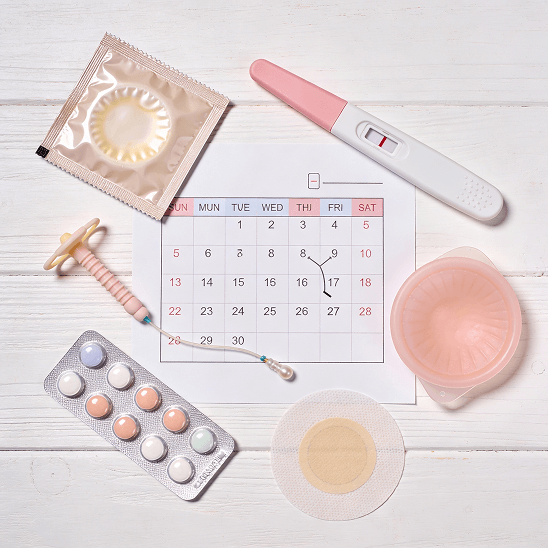
Choosing contraception can feel overwhelming when there are so many safe and effective options out there. The best choice for you depends on your health, lifestyle and personal preferences. This guide explores the different contraceptive options available, how each method works, and how to decide which option fits your needs, all the while following trusted NHS guidance to help you make a confident and informed decision.
The ideal contraceptive should match your lifestyle, how often you want to think about contraception and any health conditions you might have. When you speak to a pharmacist or clinician, you're likely to be asked about:
These questions guide safe decision making and help you find a comfortable and reliable method.
These methods last for several years and work without needing a daily routine. They are some of the most effective choices available.
A small device placed inside the womb. It contains no hormones. It can lighten or increase bleeding depending on your usual pattern, and can also be used as emergency contraception.
This releases a low dose of progestogen. Many people find their periods become lighter or stop altogether.
A small rod that sits under the skin of the upper arm. It releases progestogen into the body. It gives up to three years of protection.
Given every eight to 13 weeks depending on the type. It suits many people who prefer not to take a daily tablet.
These four options can be suitable if you want a low maintenance method or if you struggle to remember taking a daily pill.
If you want to know what contraceptive pill are available, there are two main types to consider.
This contains oestrogen and progestogen. It can help regulate periods and reduce pain, acne or heavy bleeding. It may not suit people who smoke or have certain health conditions. Your clinician will guide you based on your medical history.
Often called the mini pill. It suits many people who cannot take oestrogen. It can also be used while breastfeeding. Periods may become lighter or irregular depending on your usual cycle.
Both pills are effective when taken correctly. Your pharmacist or prescriber will help choose the safest option for you.
Barrier methods are contraceptives that create a physical block between sperm and the egg. They help prevent pregnancy and some options also help protect against sexually transmitted infections. They suit people who want a hormone free choice or who want protection from infections as well as pregnancy.
External and internal condoms protect against pregnancy and sexually transmitted infections. They suit people who want a hormone free option or who want protection from infections as well as pregnancy.
These contain the same hormones as the combined pill but release them in a different way.
The patch
You place a small patch on the skin and change it weekly. Many people choose this if they find daily tablets difficult to remember.
The vaginal ring
You place it inside the vagina for three weeks and remove it for one week. It releases a steady dose of hormones.
These can help if you want the benefits of combined contraception without taking a tablet every day.
These methods rely on tracking cycles, body temperature and cervical mucus. They require careful daily monitoring and guidance from a trained practitioner. They may not suit everyone, yet some people prefer them as a hormone free choice.
Most people tolerate contraception well, however some methods have the potential to cause some side effects. These might include temporary changes such as breast tenderness, light spotting or mood shifts. If these do not settle, you can review your choice and switch to another safe option. Your pharmacist or GP will help you find a suitable alternative.
You should speak to a clinician if you experience severe pain, sudden headaches, chest symptoms or anything that feels unusual. Many people never experience these issues but prompt advice protects your safety. Regular reviews can also help you keep track of your health while using hormonal contraception.
You can speak with a qualified health professional through My Local Surgery for clear advice on your contraceptive options. We are partnered with the NHS Pharmacy First scheme, meaning eligible patients can access free contraceptive pills. A short consultation is all you need to get safe guidance plus a convenient supply of the pill delivered to your home. Book your consultation today.
The hormonal coil, combined pill, patch and ring can help lighten or regulate periods. Your clinician will check your medical history before recommending one of these.
The combined pill or hormonal coil are often used to manage heavy periods. Your prescriber will check these options are safe for you.
The progestogen only pill, implant or injection can be safer choices. These options suit many people who need to avoid oestrogen.
Your prescriber will check for interactions and guide you toward a method that works safely alongside your medicines.
Absolutely, if you are not happy with your current method of contraception, you can switch at any time after speaking with a clinician. Support is always available if your current method does not suit you.